

Let me be straight with you before we get into this. I picked up the 475 Tax Deductions book by Bernard B. Kamoroff after my cousin told me it had saved her a lot of money on her taxes. She does bookkeeping on the side and knows what she is talking about, so I trusted the recommendation. My situation is a little different from hers. I work as a medical office coordinator, I do not have a formal business, but I have been doing some weekend house cleaning for a few neighbors and getting paid in cash for a couple of years. I wanted to know what I could actually write off. What I found when I opened this book was both more and less than I expected.
This is not a review from someone who instantly loved the book and wants to tell you how it changed everything. The 475 Tax Deductions title did help me, but it also made some things clear that the marketing copy does not exactly advertise. I want to walk through both sides honestly, because the kind of person who benefits most from this book is actually quite specific, and if you are on the wrong side of that line, you might feel like you wasted your money.
The Quick Verdict
A genuinely solid tax reference for anyone with self-employment income, but narrower in scope than its title suggests. If you have a Schedule C, it earns its place. If you do not, most of it will not apply to your situation.
Amazon Check Today's Price →If you have any self-employment income at all, even a side hustle, your tax software probably skips deductions this book covers.
The 475 Tax Deductions book by Bernard B. Kamoroff has earned a 4.7-star average from over 1,300 buyers. Most of them are freelancers, gig workers, and people running small businesses who felt undertaxed on the way out. Check the current edition and today's price.
Amazon Check Today's Price on Amazon →What the Book Actually Is (And What It Is Not)
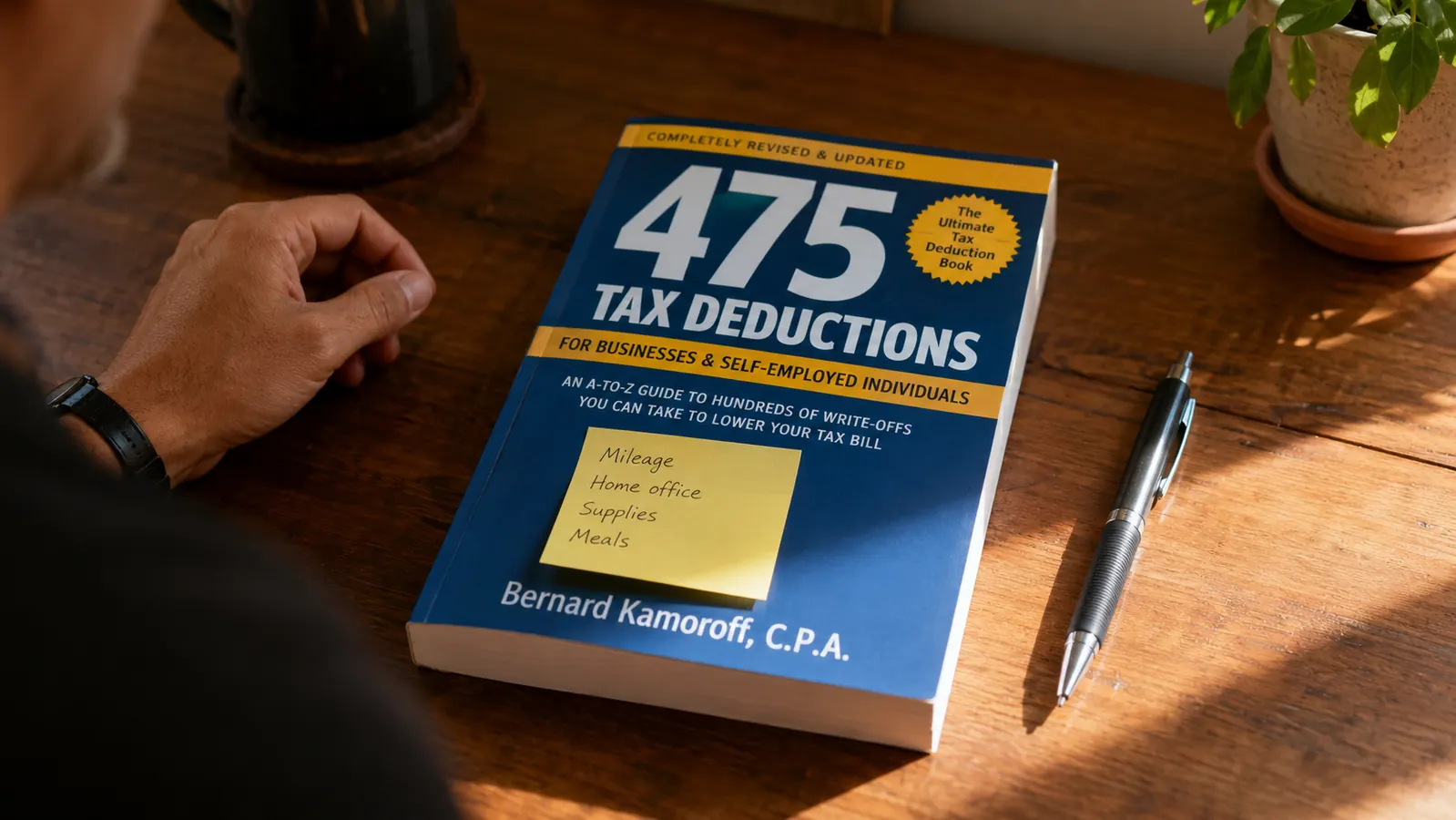
The first thing I want to clear up: this is a reference book, not a guide that walks you through anything step by step. There is no chapter one where Kamoroff says here is how to do your taxes. There are no worksheets. There is no hand-holding. What you get is an alphabetical list of business expense categories, each with a plain-English explanation of whether it qualifies as a deduction, what the rules are, and sometimes a note pointing you toward the relevant IRS publication if you want to verify anything.
That format is either exactly what you want or a little bit jarring depending on what you were expecting. If you wanted a comprehensive guide to your entire tax return, this is not that. If you wanted to look up whether your phone bill counts or whether the certification class you paid for is deductible, this answers that quickly and clearly. Think of it the way you would a medical reference book. You would not read it cover to cover for fun, but when you have a specific question, you want the answer written by someone who actually knows the subject.
Kamoroff has worked as a CPA for decades. The writing has that quality where every sentence is doing a job. Nothing is padded. There are no pep talks about your financial future. It is almost refreshing in a genre full of books that spend the first fifty pages telling you why you picked up the right book.
The Part Nobody Mentions: This Book Requires Some Legwork
Here is what I wish someone had told me before I opened it. The 475 Tax Deductions book shows you what you can potentially deduct. It does not find your deductions for you. To actually benefit from what you read, you need records. Receipts. A mileage log. Notes about what you spent money on and why it was related to your work. If you have been running a side hustle for six months and have no documentation of what you spent, this book will tell you a lot of things you should have been tracking and that is genuinely useful going forward, but it cannot recover anything retroactively.
I found this out firsthand. When I looked up expenses related to the cleaning supplies I buy for clients' homes, the book was clear that those supplies can absolutely be deducted as a business expense. But I had been buying them in mixed shopping trips with my regular household groceries, using no separate account, with no receipts saved. The book told me what I had the right to claim. My own habits meant I had nothing to back it up.
That is not the book's fault. But I do think it matters to say out loud, because I have seen some reviews that frame this as a set-it-and-forget-it solution. It is not. It is more of a map. The map is accurate and well-drawn, but you still have to walk the territory yourself.
What the Book Got Right for My Situation
Even with the documentation issue I just described, I did come away with concrete things I could act on. The section on startup costs was one I had not thought about. When I bought a mop, a bucket, and a set of microfiber cloths at the beginning of last year specifically to take on this work, those were legitimate deductible expenses I had the receipts for because they came on a separate shopping trip. The book clarified how to classify them correctly.
I also spent time in the section on retirement plans for self-employed individuals, which I had completely skipped the first time through. If you have any self-employment income and you are not contributing to a SEP-IRA or a Solo 401k, you are potentially leaving a meaningful deduction on the table while also missing out on building retirement savings. That section alone shifted how I was thinking about the money I was making on the side. It pushed me to open a SEP-IRA with a small contribution, which reduced my self-employment tax burden that year.
The health insurance deduction section was also clear on a point that my tax software had flagged but not fully explained. If you pay for your own health insurance and are self-employed, that premium is often deductible directly. The book laid out the eligibility conditions without any vagueness. My software had asked me a yes-or-no question. The book explained the conditions behind the yes.
The book told me what I had the right to claim. My own habits meant I had nothing to back it up. That is a problem the book cannot fix but can absolutely prevent going forward.
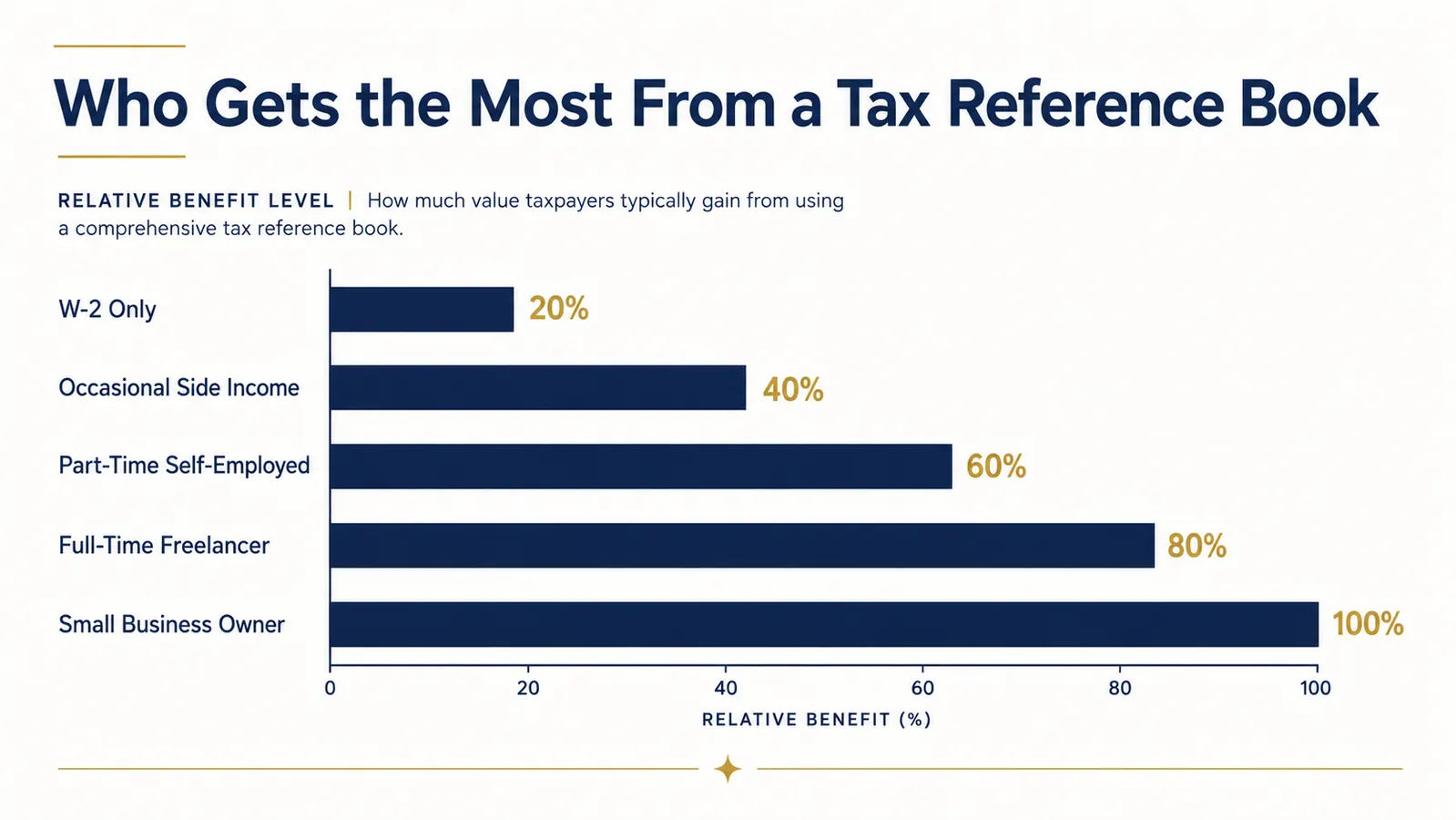
The Honest Gap: W-2 Workers Get Very Little From This Book
I want to address this head-on because the title, 475 Tax Deductions for Businesses and Self-Employed Individuals, tells you plainly who this is for. But when something says 475 deductions, it is easy for a regular employee to assume there must be something in here for me too. There is not much.
The Tax Cuts and Jobs Act of 2017 eliminated most itemized deductions for employees. You cannot deduct your work-from-home expenses as a W-2 employee under current law, regardless of what your employer requires. You cannot deduct work clothing unless it is a specific uniform that cannot be adapted for everyday use. You cannot deduct your home internet bill if you just work from home on a company laptop. Most of the 475 entries simply do not apply to someone without self-employment income.
What you might find applicable as a W-2 employee are things like the mortgage interest deduction, charitable contributions if you itemize, and medical expense thresholds. But those are covered in your tax software already and do not require a specialized reference book. If you are a pure W-2 worker with no side income, save your money or pick it up only if you are planning to start something on the side soon.
What I Liked
- Alphabetical format makes it fast to look up any specific expense category
- Written by a practicing CPA, so explanations are technically sound and citable
- Covers retirement planning options for self-employed people that many miss
- Helps you understand the record-keeping requirements before you need them
- Works as a conversation-starter with a tax preparer, not a replacement for one
- Compact and desk-friendly, easy to pull out at any point in the year
- Strong track record with over 1,300 reviews averaging 4.7 stars
Where It Falls Short
- Almost entirely useless for W-2-only earners under current tax law
- Does not guide you through your return, just identifies what qualifies
- Requires you to already have records, receipts, and documentation to act on most entries
- Print editions go stale between updates, dollar limits and rules can change
- No digital companion, no searchable version, no app or online access included

How the Rating of 4.7 Stars Can Be a Little Misleading
I do not want to sound like I am being negative about a genuinely good book, because I do think it is good. But a high average rating can sometimes hide the shape of the audience leaving those reviews. Almost every strong review of the 475 Tax Deductions book comes from someone with Schedule C income, meaning people who already knew they were self-employed and were looking for a systematic way to organize their deductions. Those people are the right audience, and for them the book really does deliver.
The lower-rated reviews, the two-star and three-star ones, cluster around a consistent complaint. People who expected the book to cover their employee situation, or who picked it up hoping it would work like an accountant and automatically surface savings, were disappointed. The book does neither of those things. If you go in with accurate expectations, the rating makes total sense. If you go in expecting something more comprehensive, you might feel misled.
For context on how it compares to using tax software or hiring a preparer, I also found this piece on the site helpful: 475 Tax Deductions vs H&R Block Software. The short answer is that they solve different problems, and many people benefit from having both.
The Best Version of This Purchase
If you are going to buy this book and actually get value from it, here is when and how to use it. Buy it now, not in April. Sit down with it before the year is over. Read through the index looking for every expense category that touches your work. Open a dedicated spreadsheet or even a plain notebook. Start recording what you spend that connects to your income-producing activity, the date, the amount, what it was for, and how it relates to your work. Then when filing season arrives, you will have the documentation to back up what you claim.
That is the difference between someone who says this book saved me money and someone who says I bought it and it did not really help. The book itself is identical in both cases. The outcome depends on whether you used it before you needed it.

Who This Is For
If you have any self-employment income at all, this book belongs on your desk. It does not matter if it is a few hundred dollars a month from driving, delivering, pet sitting, cleaning, tutoring, selling handmade items, or any other kind of work where clients pay you directly and no employer withholds taxes. If you file or expect to file a Schedule C at any point, this reference is worth having. It is especially valuable for people who are just starting out and do not have the budget for a CPA but want to make sure they are not leaving obvious money on the table.
It is also worth having if you do use a CPA but want to come to that conversation more prepared. Understanding what questions to ask your tax professional is genuinely useful, and this book builds that vocabulary. You can also read through the related article on this site covering what it is like to use the 475 Tax Deductions book over multiple tax seasons, which covers a different angle on the same product.
Who Should Skip It
If you are a W-2 employee with no side income and no plans to start any, most of this book will be irrelevant to your situation. You might read through it and recognize a few things that apply to you around itemized deductions, but standard tax software will surface those same items through its interview process. The specialized depth of this reference is not something you will need.
Also skip it if you are expecting to open it in April and have it rescue a return you have not prepared for. The book cannot manufacture deductions. It can only help you recognize and document the ones that legitimately apply to spending you have already done and recorded. Pick it up in September, read it that month, and start building better habits while you still have several months of the tax year left to make use of what you learn.
This book works best when you read it before tax season, not during it. If you have any self-employment income, now is the right time.
The 475 Tax Deductions book by Bernard B. Kamoroff carries a 4.7-star average from more than 1,300 people who file Schedule C income. It is a reference tool that clarifies what you legally qualify for, written by a CPA who does not pad the pages with inspiration. Check the current edition and today's price on Amazon.
Amazon Check Today's Price on Amazon →